12 Free Christmas Decorating Ideas Using What You Already Have
Make a festive home without adding to holiday costs: reuse decorations, try simple projects and look for free items in your community.

A festive home doesn’t require a full set of new decorations. If your holiday budget is already stretched, start with what you own, choose a few places to decorate, and skip any project that would send you shopping for supplies. A small display made from familiar things can feel just as personal as a room filled with new purchases.

That approach can also help you see how much seasonal decor has built up over the years. The person behind these ideas scaled back, kept the pieces she still enjoyed and sold some decorations she no longer wanted. The result wasn’t a bare home; it was a more deliberate way to decorate, with fewer items to store and some extra money from the sale.
Here’s the useful rule: a decorating idea is only free if you already have what it needs. Craft projects can look inexpensive until you add up the paint, glue, ribbon and special paper. Before starting anything, check your storage bins, closets, kitchen cupboards and leftover craft supplies. Then pick ideas that suit your home, your schedule and the materials on hand.
Start with an inventory
Pull out your Christmas decorations and take stock before deciding what to make. You may find ornaments you forgot about, ribbon left from another year, old cards, or materials that can be repurposed. You may also notice that some items haven’t been used in years and no longer fit the way you want to decorate.
Sort what you find into three groups: pieces you want to display this year, decorations you’re keeping for sentimental reasons, and items you’re ready to pass on. Keeping a few meaningful decorations can matter more than having enough to fill every shelf. There’s no need to discard something simply because it won’t be on display this season.
If you have decor in good condition that you no longer want, you could give it away or sell it locally. For a sale, take clear photos, describe the condition accurately and look at what similar secondhand pieces are listed for before setting a price. It may bring in some extra cash, though the amount and how quickly an item sells will depend on local demand.
A useful inventory can also prevent unnecessary spending. When you know what you have, it’s easier to use an old ornament in a new spot or find a container that will hold a display. You’re less likely to buy a duplicate just because the original is tucked away in a box.
| What you may already have | Possible use | Where it could go |
|---|---|---|
| Old Christmas ornaments | Group them in a bowl or rearrange them on a tree | Table, shelf or tree |
| Pinecones | Make a natural arrangement or simple hanging decoration | Table or mantel |
| Christmas cards | Display them together or make a paper garland | Wall, shelf or doorway |
| Leftover wrapping paper | Make a paper chain or small paper trees | Wall or bookshelf |
| Empty cardboard boxes | Create decorative packages or cutout shapes | Under the tree or on a shelf |
| Jars, bowls or vases | Hold ornaments, pinecones or greenery | Table or counter |
| Working Christmas lights | Brighten one display or window | Living room or window |
| Books | Stack into a small tree shape | Table or bookshelf |
| Old fabric or clothing | Make a garland or bows | Tree or wall |
| Flour, salt and water | Make salt dough ornaments if ingredients are spare | Christmas tree |
These projects work as no-spend ideas only when the materials are already available. If one requires a supply you don’t own, pick another project instead of buying items to complete it.
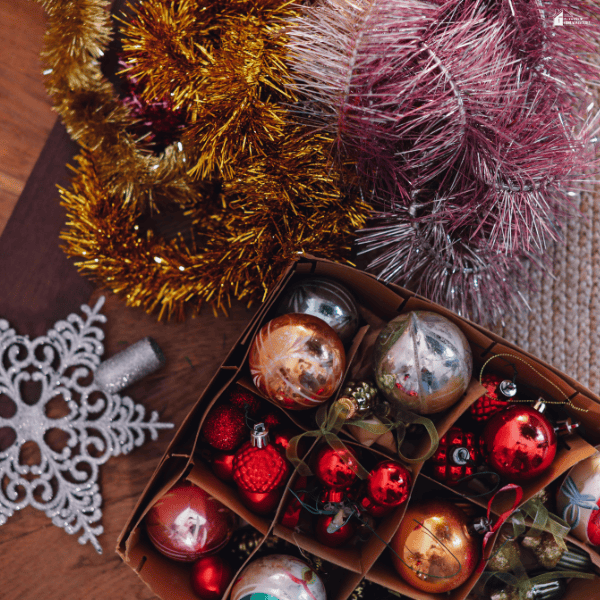
12 ways to decorate with what you have
1. Use fewer decorations in the rooms you enjoy most
You don’t need to decorate every room to make your home feel seasonal. Choose the spaces where your household spends time, such as the living room, and concentrate your existing decorations there. A tree, a few ornaments on a shelf or one small table display can be enough.
When you spread a limited number of decorations across the whole house, each display may feel sparse. Grouping them in one place can give them more presence. A vase, basket or bowl you already own can help bring a small collection together, and a few cards can add color without requiring a larger stash of decor.
There’s a practical benefit, too: fewer displays take less time to set up and pack away. If you’re juggling work, family commitments and holiday costs, decorating less can be a sensible choice in its own right. Put the effort into a space where people will see and enjoy it.
2. Give old ornaments a new place
Before buying replacement ornaments, try using the ones you own differently. A collection that feels mismatched on a tree may work well together in a bowl or clear container. You can also group ornaments by color, using similar shades in one small display instead of mixing everything together.
Move decorations around the house, too. An item that usually hangs on the tree might look right on a shelf; a familiar ornament could become part of a centerpiece. If you have leftover ribbon, use it to change how an ornament hangs or add a bow to an existing display.
If you already have paint or other craft supplies, you might refresh an ornament with them. But buying paint for a single project can turn a free idea into an added expense. Sometimes the easiest update is simply to look at the decorations you own as pieces that can go in more than one place.
3. Arrange pinecones and permitted greenery
Pinecones can make a seasonal arrangement without paint or glitter. If you have access to a place where collecting them is allowed, gather a few, check them for dirt or insects, and let them dry thoroughly. Arrange them in a basket or bowl you already own. If clean evergreen branches are available, a few can fill out the display.
You can also hang pinecones from the tree with string or ribbon, if you have some on hand. If not, leave them in a tabletop arrangement. Their natural texture can work on its own, especially alongside ornaments you already have.
Be careful about adding unfamiliar plants or berries. Some, including holly and mistletoe berries, can be harmful if swallowed. The American Academy of Pediatrics’ holiday decorating safety recommendations advise keeping these away from children. Use familiar decorations, such as ribbon or ornaments, for a pop of color instead.
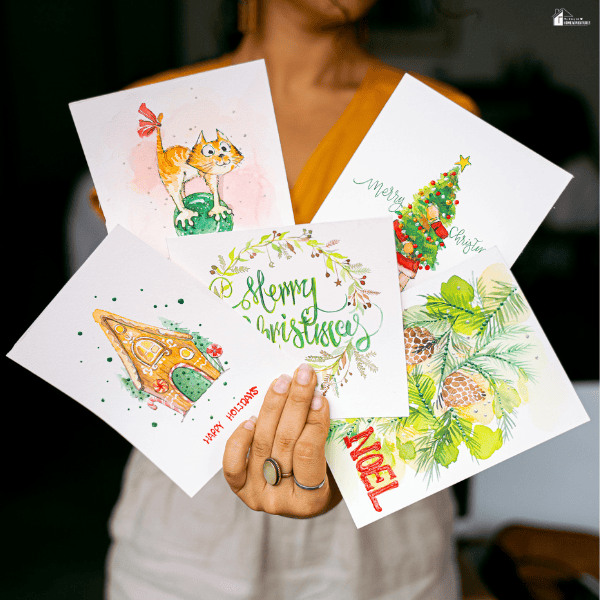
4. Display old Christmas cards
Cards already have festive artwork and color, so they can stand in for decorative paper. Arrange several upright on a mantel, table or bookshelf. If you have string and clips, hang them across a wall as a simple garland.
To make hanging ornaments, cut out pictures from old cards and attach them to cardboard from a cereal box if you want a sturdier backing. Make a small hole at the top, then add a loop of string or ribbon if you have one. Another option is to put a card inside a picture frame and display it as seasonal art.
Think before cutting up cards with messages you want to keep. You can display those whole and use only cards whose pictures you’re happy to repurpose. That way, a decoration can bring back the person who sent it as well as add a little color to the room.
5. Turn wrapping paper scraps into garlands and trees
Leftover wrapping paper can become a paper chain if you have enough strips, plus tape or glue. Cut the paper into strips about an inch wide. Form a loop with the first strip and secure the ends; thread the next strip through it, make another loop and continue until the chain is the length you want.
Hang the finished chain on a shelf, wall or doorway, away from heat sources. If you have only small scraps, cut out triangles in different sizes and arrange them on cardboard in the shape of a tree. You could also cut wrapping paper to fit a picture frame and use the pattern as a small display.
These ideas don’t call for special paper. The point is to make use of whatever remains from previous gifts. If you don’t have the paper, tape, glue or scissors a project needs, choose a different one rather than adding a shopping trip to the plan.
6. Make decorative packages from cardboard boxes
Empty boxes can fill the space beneath a tree or add height to a shelf display. Wrap them with leftover paper and ribbon if you have both. If you don’t, plain paper or paper shapes may work, or you can use the box as the base for a cardboard star or tree cutout.
Consider how children in your home might interpret an empty box wrapped like a present. If they may expect a gift inside, use the cardboard for a different decoration. Keep paper and cardboard displays away from fireplaces, candles, heaters and other sources of heat.
7. Put jars, bowls and vases to work
Look in your cupboards before buying decorative containers. Clean, dry food jars, mason jars, bowls and vases can hold ornaments, pinecones, ribbons or greenery that you already own. A few containers of different sizes grouped together can make a simple display for a table or shelf.
Remove food labels and wash containers before using them. Tie leftover ribbon around the outside of a jar for a bit of color if you have some. There’s no need to buy special filler or artificial greenery just to complete the arrangement; a container can also hold a few ornaments on their own.
Think about who lives in your home when choosing a container. Glass may be a poor fit if children or pets could knock it over. An unbreakable bowl or plastic container can serve the same purpose.
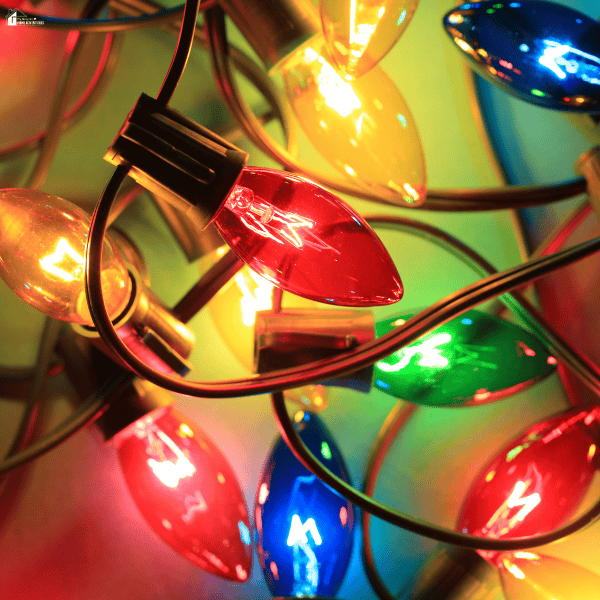
8. Use existing Christmas lights selectively
A working string of lights can make one area feel festive even if you have few other decorations. Put it on the tree, around a window or beside a garland, depending on what you own and where it’s designed to be used. If you have only one string, choose the spot your household will enjoy most.
Check older lights for damaged cords, broken bulbs or loose connections before using them. Don’t use a damaged string to avoid buying another one. The National Fire Protection Association’s winter holiday safety guidance recommends checking lights for damage, using them in suitable locations and keeping decorations away from heat sources. Turn lights off before leaving home or going to bed.
If you’re watching your electricity bill, decorative lights don’t need to stay on all day. Switch them on when you want to enjoy the display, then turn them off. And if you don’t own lights, there are plenty of other ways to add seasonal color without purchasing a string.
9. Build a small tree from books or cardboard
A traditional tree isn’t the only way to create a focal point. Stack books in a tree-like shape, placing larger ones at the bottom and smaller ones toward the top. Set the stack on a sturdy surface and add a lightweight ornament if you have one.
Check that the stack is stable, particularly if children might reach it. For a flat display, cut a tree shape from cardboard and decorate it with paper scraps. You could also arrange paper triangles or other shapes on a wall, using an attachment method that suits your surfaces.
A craft can be fun if you already have its materials. For example, a coffee filter tree project uses coffee filters, craft sticks, paint and glue. A Coffee Filter Christmas Tree Craft is an option if those supplies are already at home; it makes less sense as a no-spend project if you’d need to buy them all.
10. Reuse fabric scraps and old clothing
Fabric from clothing you no longer use can become bows or a garland. Cut it into strips and tie them along a piece of string or ribbon, alternating colors if you like. If you don’t have string, tie strips together to make a longer decoration and check that the knots are secure before hanging it.
Old shirts, scarves, sweaters and spare fabric can all be candidates, including pieces in colors that aren’t traditionally associated with Christmas. There’s no need to cut up anything your household still needs or buy fabric for the project. If sewing and crafting aren’t appealing, choose a simpler display instead; a free idea shouldn’t become a time-consuming obligation.
11. Make salt dough ornaments only if the ingredients are spare
Flour, salt and water can be combined to make ornaments if you already have ingredients to spare. One basic recipe uses two cups of flour, one cup of salt and roughly three-quarters to one cup of water. Mix the dry ingredients, add water gradually until you have workable dough, roll it out and cut shapes. Make a hole near the top before the dough dries if you want to hang the finished pieces.
Cookie cutters can make shapes, while a drinking glass can cut circles. Let the ornaments dry completely using a suitable salt dough method before adding string or displaying them.
There’s a budget trade-off here: pantry ingredients still have a cost and may be needed for meals. Skip the project if groceries are tight. Salt dough isn’t edible and can be dangerous to pets because of its high salt content, as the FDA’s holiday hazards guidance explains. Raw flour shouldn’t be eaten either, so supervise children, clean hands and surfaces after handling dough, and keep finished ornaments away from pets and anyone who might put them in their mouth.
12. Make one small display with the pieces you like best
You don’t have to turn every object into a craft. A few favorite ornaments, a card and a container you already own can be enough for a small arrangement. Put the pieces together on a table or shelf, and adjust them until the display feels balanced.
This is often the quickest option when you’re short on supplies or time. A small arrangement can also help you make good use of decorations you’d otherwise leave packed away. You can change it next year without buying anything new.
Find free decorations locally
If you don’t have much stored at home, ask friends or family whether they have items they no longer use. People who are downsizing their collections may be willing to pass along ornaments, artificial trees, wreaths or other decorations. Local Buy Nothing groups, neighborhood pages and other community giveaway groups can be another place to look.
What’s available will depend on where you live, and you may not find the exact item you want. Check early if you’re hoping for a tree. Before accepting anything, inspect it for damage and consider whether it’s suitable for your household. Take extra care with electrical decorations, glass ornaments and small pieces if children or pets are around.
Factor in the trip, too. A free decoration may not save money if collecting it means driving a long distance and spending more on fuel than the item is worth to you. A nearby hand-me-down, or making do with what you own, may be the more practical choice.
If you have no decorations or craft supplies
Try asking someone you know if they have decorations to share. If that doesn’t work, look around for paper, cardboard, books, jars or other materials that could support one simple display. A small tree made from books, a paper decoration or a bowl of permitted pinecones can give a room a seasonal touch without the cost of a full-size tree.
Some households won’t have spare materials, decorations or time for crafts. There’s no need to spend money on supplies for a project presented as free. You can enjoy holiday traditions without decorating in the same way you have in previous years.
If other holiday expenses are also difficult to manage, focus first on the needs your household has identified. A guide to managing Christmas when money is tight offers other ideas for approaching a stretched budget.
Decide whether any purchase fits your budget
If money is tight, new decorations may not be a priority. That doesn’t mean a purchase can never make sense; it means considering it alongside the rest of your holiday spending before heading to the store. A few small purchases can add up, so decide what you can afford before spending.
If you have room in your budget, consider whether you’ll use an item again and whether it works with decorations you already own. If it doesn’t fit your plans or budget, leave it for another year. The person who inspired these ideas chose to sell some decorations and use fewer, based on what worked for her household. That’s one option, not a rule for every family.
A Christmas budget worksheet can help you consider decorations alongside gifts, food and other seasonal costs. Whether or not you use a worksheet, it can help to decide the decorating amount before shopping instead of trying to reconstruct the total afterward.
Quick answers to common questions
How can I make my home feel Christmassy without buying anything?
Start with decorations you already own and focus on one or two rooms. A bowl of ornaments, a display of old cards, a few clean pinecones or lights you’ve checked and know are safe to use can add a seasonal touch. If you don’t have decor, ask people you know or check nearby community giveaway groups.
What can I use instead of Christmas ornaments?
Cards, cardboard shapes, paper, fabric scraps and pinecones can all be used in displays. Some hanging projects need string, tape or another supply, so check your cupboards first. If you don’t have what you need to hang an item, arrange it on a table or shelf instead.
How can I decorate without a Christmas tree?
Make a small focal point with stacked books, a cardboard tree, paper shapes or decorations arranged on a shelf. A tabletop display can suit your home just as well as a full-size tree, especially if you have limited space or few decorations.
What’s an easy free decoration?
Put old ornaments in a bowl or container you already own. It takes little time and doesn’t require extra craft supplies. If you don’t have ornaments, displaying Christmas cards or arranging clean pinecones in a basket can be just as straightforward.
Can decorating really cost nothing?
It can, if you use items you already own or receive for free. Some do-it-yourself projects need materials that aren’t free if you have to buy them, so switch to a simpler idea when you’re missing supplies.
A practical way to decorate with less
Start with your storage bins and keep the pieces you still enjoy using. Choose one area to decorate, then see if a few ornaments, a card or a household container can make a display. If you have surplus items, giving them away or selling them may free up storage space; a sale could also bring in extra money during an expensive season.
There’s no single right amount of holiday decor. For one household, that may mean a tree and a few familiar ornaments. For another, it may be a small display made from paper and books. The useful test is whether the choice fits your budget, your home and the time you want to spend on it.
Use what you have first, and let the rest go if it doesn’t suit your plans. A home can feel festive without a new shopping list, and money not spent on decorations can stay available for other household priorities.