A Practical Christmas Planner for Keeping Holiday Spending in Check
A seven day planner pairs a spending worksheet with meal planning, home inventory and no cost activities to help families make December more manageable.

A holiday budget is easier to manage when it covers more than gifts. Food, decorations, wrapping supplies and last minute plans all compete for the same dollars, especially when household finances are already stretched. A free seven day Christmas planner brings those decisions together in one place, with worksheets for spending, meals, activities and a year end reset.
The planner is offered in exchange for signing up to receive emails. Subscribers also receive a seven day email challenge that guides them through its sections with a small task each day. That format can help turn broad intentions, such as “spend less,” into practical steps: set a limit, check supplies, plan meals and choose activities that don’t add to the bill.
Start with the spending limit
The budget worksheet asks families to set a total Christmas spending limit and divide it among categories such as gifts, food, decorations and other expenses. There’s also room for notes and adjustments. That flexibility matters: plans can change when costs come up or circumstances shift, and a budget is more useful when it can be updated than when it assumes every expense will go exactly as expected.
Before filling in the categories, consider the total amount available for holiday spending. Then allocate it across the priorities that matter to the household. A written limit makes trade offs easier to see early. If one category grows, the worksheet provides a place to consider what might need to change elsewhere.
The planner includes links to ideas for saving money after Christmas, which may help with planning beyond the current season.
Check the cupboards and closets before shopping
A home inventory page is designed to catch items already on hand before anyone buys duplicates. Its checklist covers ornaments, lights, stockings, wrapping paper, ribbon and tape, as well as pantry supplies. Taking a few minutes to check those areas can make a shopping list more accurate and reveal what can be reused.
The same approach applies to food. The planner links to suggestions for budget friendly pantry staples. Checking the cupboard first can help shape meals around ingredients already purchased, while reducing the chance that forgotten items expire unused.
Make room for simple family activities
The no spend activity list offers ideas such as a movie night, building a blanket fort, playing games, walking to see holiday lights and baking together. These options can provide time together without the cost of an outing. Families can choose what fits their routines and available supplies; the point is to have a few ideas ready for evenings when an expensive plan feels tempting or impractical.
That list also gives gift and entertainment spending some context. A memorable holiday doesn’t have to depend on adding more paid activities to the calendar. A low cost plan can still make space for shared time, while leaving more room in the budget for expenses the family considers a higher priority.
Plan homemade gifts with costs in view
A DIY gift worksheet includes space to record an idea, the materials required, estimated cost and progress. Homemade presents can be personal, but they are not automatically free: supplies, tools and time may all be part of the decision. Writing down the materials and expected cost before starting can help compare a project with other gift options and prevent several small purchases from quietly adding up.
The progress field can also help keep projects manageable. A family can see what still needs to be made or bought and decide whether to simplify an idea if the schedule or budget gets tight.
Clear space and plan meals
A short decluttering checklist covers the living room, kitchen, bedrooms, bathrooms and entryway. Clearing selected areas before new items arrive can make the home feel more manageable. The planner also suggests that unwanted belongings might be donated or sold. Any money from a sale is uncertain, so it makes sense to treat it as possible extra cash rather than include it in the budget before a sale happens.
For food, a seven day meal template helps organize dinners around pantry ingredients, leftovers or simple slow cooker meals. It includes a grocery list area tied to the plan. Deciding on meals in advance can make it easier to shop for what’s needed and avoid rushed takeout when the week gets busy. The template is a starting point: households can adapt it to their schedules, food preferences and what they already have.
Use the final page to carry lessons into next year
The reflection worksheet asks users to record how much they saved, their biggest frugal win, what they learned, a spending goal for next Christmas and three financial goals for 2025. Recording results can make progress visible and help turn a busy season into useful information for next year’s plan. The goals are prompts, not fixed targets; each household can set priorities that fit its finances.
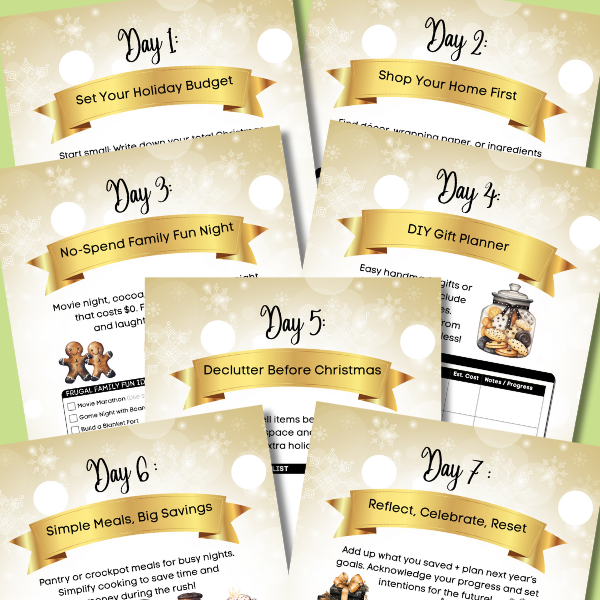
The planner is intended for families who want a straightforward way to organize a lower cost holiday, reuse what they own and keep plans realistic. Its worksheets cover the main pressure points in one sequence: decide what can be spent, check supplies, plan gifts and meals, and choose activities that fit the budget. The accompanying email challenge breaks those tasks into daily steps.
For a family facing a particularly tight budget, the most useful first move may be setting the spending ceiling before buying anything. From there, the inventory and meal pages can help identify which planned purchases are still necessary. A calmer December may start with fewer decisions made in a rush and a clearer view of what the household can afford.